

Views: 222 Author: Zhang Xin Publish Time: 2026-05-20 Origin: Site


Content Menu
>> Main Functions of Potting Compounds
>> Common Types of Potting Compounds
>>> Silicone Potting Compounds
>>> Polyurethane Potting Compounds
● Why Reliability Matters in New Energy Systems
● How Potting Compounds Improve Reliability
● : Thermal Management Enhancement
>> : Improving Heat Dissipation
● : Moisture and Environmental Protection
● : Electrical Insulation Improvement
>> : Preventing Short Circuits
>> : Enhancing Dielectric Strength
● : Mechanical Shock and Vibration Protection
● : Chemical and Contaminant Resistance
>> : Protection in Industrial Environments
>> : Resistance to Battery Electrolytes
● Potting Compounds in Electric Vehicle Systems
>> : Power Electronics Reliability
>> : Charging Infrastructure Protection
● Potting Compounds in Solar Energy Systems
>> : Protecting Solar Junction Boxes
● Potting Compounds in Wind Energy Applications
>> : Extreme Environmental Conditions
>> : Reducing Maintenance Costs
● Potting Compounds in Energy Storage Systems
>> : Battery Thermal Management
● Key Properties to Consider When Selecting Potting Compounds
>> : Viscosity
>> : Operating Temperature Range
● Common Challenges in Potting Applications
>> : Thermal Expansion Mismatch
● Emerging Trends in Potting Compound Technology
>> : Higher Thermal Conductivity
>> : Environmentally Friendly Formulations
>> : Faster Curing Technologies
>> : Smart Functional Materials
● The Future of Reliability in New Energy Systems
>> What is the main purpose of potting compounds in new energy systems?
>> Which potting compound is best for high-temperature applications?
>> How do thermally conductive potting compounds improve performance?
>> Why are potting compounds important in EV battery systems?
>> Can potting compounds help prevent corrosion?
>> What is the difference between epoxy and silicone potting compounds?
>> Are potting compounds used in solar energy systems?
>> How do potting compounds improve vibration resistance?
The rapid growth of new energy technologies is reshaping industries across the world. Electric vehicles, energy storage systems, solar power installations, wind turbines, charging stations, smart grids, and advanced power electronics are becoming essential parts of modern infrastructure. As these systems become more powerful and compact, reliability has become one of the most important engineering priorities.
New energy systems often operate in harsh environments that involve heat, vibration, moisture, dust, chemicals, voltage stress, and continuous outdoor exposure. Any failure in electronic components can lead to safety risks, expensive downtime, reduced efficiency, or shortened service life. For manufacturers and engineers, improving long-term durability is now just as important as improving performance.
Potting compounds play a critical role in solving these challenges. By encapsulating sensitive electronic components, potting materials protect devices from environmental damage while improving thermal management, electrical insulation, and mechanical stability. Today, potting compounds are widely used in electric vehicle batteries, onboard chargers, inverters, power modules, photovoltaic junction boxes, wind turbine electronics, sensors, LED drivers, and industrial energy equipment.
This article explores how potting compounds improve reliability in new energy systems, the major types of materials available, their key advantages, application methods, and future development trends.
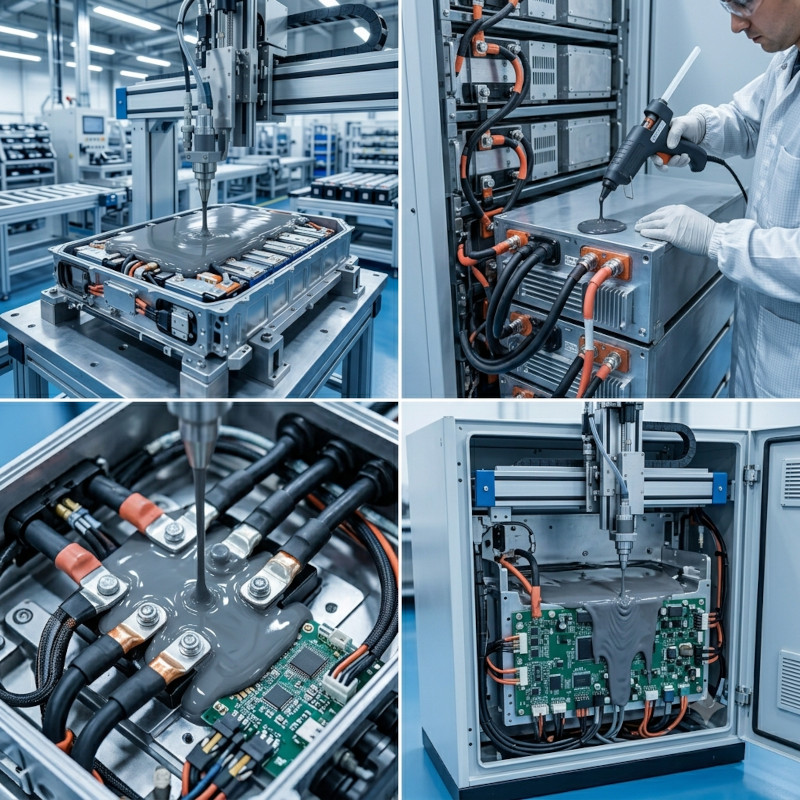
Potting compounds are protective materials used to encapsulate electronic assemblies and components. The liquid material is poured or injected into a housing that contains electronic parts, and then cured into a solid or gel-like protective layer.
The primary purpose of potting is to shield electronics from external environmental conditions and operational stresses. Potting compounds create a barrier against moisture, dust, corrosion, vibration, and electrical hazards while also helping transfer heat away from critical components.
Potting compounds serve several important functions in new energy applications:
* Thermal management
* Electrical insulation
* Mechanical protection
* Waterproof sealing
* Chemical resistance
* Vibration absorption
* Corrosion prevention
* Arc suppression
* Improved operational lifespan
Different materials are selected depending on the application requirements.

Epoxy systems provide excellent adhesion, strong mechanical strength, and high chemical resistance. They are commonly used in power electronics, transformers, sensors, and automotive applications.
Advantages include:
* High durability
* Excellent insulation
* Strong structural support
* Good environmental resistance
However, epoxy materials can become rigid after curing, which may create stress under thermal cycling.
Silicone potting compounds are known for their flexibility and high-temperature resistance. They perform well in applications exposed to thermal expansion and contraction.
Advantages include:
* Wide operating temperature range
* Excellent UV resistance
* Flexibility after curing
* Good weather resistance
Silicone materials are widely used in EV electronics, LED drivers, and outdoor renewable energy systems.
Polyurethane systems offer a balance between flexibility and toughness. They provide good moisture resistance and mechanical shock protection.
Advantages include:
* Good impact resistance
* Flexible curing properties
* Strong moisture protection
* Suitable for sensitive electronics
Polyurethane materials are often used in battery packs, sensors, and charging equipment.
Reliability directly affects the performance, safety, and economic value of new energy technologies. Unlike traditional systems, many renewable energy applications operate continuously under demanding conditions for years or even decades.
For example:
* Solar power systems may operate outdoors for over 25 years
* Wind turbines face vibration, humidity, and temperature extremes
* EV battery systems experience continuous charging and discharging cycles
* Energy storage systems generate large amounts of heat
* Fast charging stations operate under high electrical loads
Any failure can lead to:
* System shutdown
* Fire risk
* Reduced efficiency
* High maintenance costs
* Product recalls
* Customer dissatisfaction
Potting compounds help minimize these risks by improving the durability and protection of critical electronic assemblies.

Heat is one of the biggest threats to electronic reliability. Excessive temperatures accelerate material aging, damage semiconductors, reduce efficiency, and shorten component lifespan.
Thermally conductive potting compounds transfer heat away from sensitive components toward heat sinks or enclosures. This prevents localized overheating and stabilizes operating temperatures.
Applications include:
* Power modules
* Battery management systems
* EV onboard chargers
* DC-DC converters
* Inverters
* Charging piles
By lowering operating temperatures, potting compounds can significantly extend component lifespan.
Frequent temperature changes cause expansion and contraction inside electronic assemblies. Over time, this creates stress on solder joints and components.
Flexible potting materials absorb thermal expansion differences between materials, reducing cracking and mechanical fatigue.
This is especially important in:
* Automotive electronics
* Outdoor solar equipment
* Wind turbine control systems
Moisture is one of the leading causes of electronic failure. Water intrusion can cause corrosion, insulation breakdown, short circuits, and metal oxidation.
Potting compounds create a sealed protective barrier around electronics, preventing water and humidity from entering sensitive areas.
This protection is critical for:
* Solar junction boxes
* Outdoor sensors
* Wind turbine electronics
* EV charging stations
* Marine energy systems
Electronic components exposed to salt spray, chemicals, or humidity may corrode over time. Potting compounds isolate components from the environment and prevent oxidation.
This is particularly important in coastal and industrial environments.
New energy systems often involve high voltages and high current densities. Electrical insulation is essential for operational safety and system stability.
Potting compounds separate conductive components and prevent accidental electrical contact.
This helps improve:
* Operational safety
* Voltage stability
* Arc resistance
* Long-term reliability
High-performance potting materials offer strong dielectric properties, allowing systems to safely handle elevated voltages.
Applications include:
* Battery modules
* High-voltage connectors
* Power converters
* Transformers
New energy equipment often experiences continuous vibration and mechanical stress.
Examples include:
* Electric vehicles
* Rail transportation
* Wind turbines
* Industrial energy systems
Potting compounds cushion sensitive components against external impacts and mechanical shocks.
This reduces:
* Component displacement
* Solder joint cracking
* Connector loosening
* Structural fatigue
In EVs and wind turbines, long-term vibration can damage electronic assemblies. Flexible potting materials absorb vibration energy and improve structural stability.
This is critical for maintaining long-term operational reliability.
Many new energy systems operate in chemically aggressive environments.
Potential contaminants include:
* Oils
* Coolants
* Salt spray
* Dust
* Cleaning chemicals
* Industrial gases
Potting compounds protect electronics by isolating them from harmful substances.
Industrial renewable energy systems may operate in factories, mines, or heavy manufacturing environments where contamination risks are high.
Potting compounds improve durability by preventing chemical exposure.
Battery systems may occasionally experience electrolyte leakage. Proper potting materials can help resist chemical attack and improve battery safety.
Electric vehicles are one of the largest application areas for potting compounds.
Battery systems contain numerous sensitive electronic components that require protection from heat, vibration, and moisture.
Potting compounds help:
* Improve thermal conductivity
* Enhance fire resistance
* Prevent moisture intrusion
* Reduce vibration damage
EV inverters and converters operate under high power density conditions. Potting materials help manage heat and improve insulation performance.
EV charging stations face outdoor environmental exposure and continuous electrical stress.
Potting compounds improve:
* Waterproof performance
* UV resistance
* Electrical insulation
* Long-term durability
Solar systems require reliable performance over decades of outdoor exposure.
Junction boxes contain electrical connections that must remain protected against moisture and temperature changes.
Potting compounds help ensure stable operation in:
* Rain
* UV exposure
* Humidity
* Temperature cycling
Solar inverters are essential components that convert DC power into usable AC electricity. Potting compounds improve thermal management and reduce environmental damage.
Wind turbines operate in some of the harshest environments in the energy industry.
Wind turbine electronics may face:
* Continuous vibration
* Low temperatures
* High humidity
* Salt spray
* Strong winds
Potting compounds provide durable environmental protection.
Improved electronic reliability reduces maintenance frequency and downtime, helping operators lower operating costs.
Energy storage systems are becoming increasingly important for renewable energy integration.
Large battery systems generate significant heat during charging and discharging cycles.
Thermally conductive potting compounds help:
* Stabilize temperatures
* Improve safety
* Reduce thermal runaway risks
* Extend battery lifespan
Certain potting materials offer flame-retardant properties that help improve system safety in high-energy battery applications.
Selecting the correct material is essential for achieving optimal reliability.
Applications involving power electronics often require efficient heat transfer capabilities.
Low-viscosity materials improve flow into complex assemblies and reduce air void formation.
Flexible materials perform better under vibration and thermal cycling conditions.
Many energy systems require flame-retardant materials to meet safety standards.
Materials must withstand the expected environmental and operational temperatures.
Strong adhesion improves sealing performance and mechanical stability.
Although potting compounds provide many advantages, proper processing is essential.
Entrapped air can reduce insulation performance and thermal conductivity.
Proper degassing and dispensing methods help minimize voids.
Incorrect mixing ratios or curing conditions may result in incomplete curing and reduced reliability.
Different materials expand at different rates under temperature changes. Selecting the appropriate flexibility level is critical.
The demand for advanced potting materials continues to grow alongside the expansion of renewable energy technologies.
As electronic power density increases, manufacturers are developing materials with improved thermal performance.
Lightweight solutions are increasingly important for electric vehicles and portable energy systems.
Sustainable and low-VOC materials are becoming more popular in environmentally conscious industries.
Manufacturers are seeking faster production cycles through rapid-curing formulations.
Future potting compounds may integrate advanced functionalities such as self-healing properties and enhanced fire suppression capabilities.
As renewable energy adoption accelerates globally, system reliability will become even more critical. Modern energy systems are expected to operate safely and efficiently for long periods with minimal maintenance.
Potting compounds will continue to play a central role in enabling these expectations by protecting electronics from increasingly demanding operating environments.
The future will likely see:
* More thermally conductive materials
* Improved fire-resistant technologies
* Better compatibility with automated manufacturing
* Advanced lightweight formulations
* Enhanced sustainability performance
Manufacturers that invest in high-quality potting technologies will gain advantages in product durability, safety, and market competitiveness.
Potting compounds are essential materials for improving the reliability of new energy systems. By protecting sensitive electronics against heat, moisture, vibration, chemicals, and electrical stress, these materials help ensure stable and long-lasting system performance.
From electric vehicles and charging infrastructure to solar power systems, wind turbines, and energy storage installations, potting compounds support the safe and efficient operation of modern renewable energy technologies.
Different material types such as epoxy, silicone, and polyurethane each offer unique advantages depending on the application requirements. Selecting the correct material involves balancing thermal conductivity, flexibility, insulation performance, environmental resistance, and processing conditions.
As new energy technologies continue evolving, the importance of advanced potting solutions will only increase. Companies that focus on high-reliability protection technologies will be better positioned to meet the growing demands of the global energy transition.
The main purpose is to protect electronic components from environmental damage, thermal stress, vibration, moisture, and electrical hazards while improving overall system reliability.
Silicone potting compounds are commonly preferred for high-temperature environments because they maintain flexibility and stability across a wide temperature range.
They transfer heat away from sensitive electronic components, reducing overheating and improving operational lifespan and efficiency.
They improve thermal management, electrical insulation, vibration resistance, and moisture protection, helping enhance battery safety and durability.
Yes. Potting compounds create a protective barrier that isolates electronic components from humidity, chemicals, salt spray, and other corrosive substances.
Epoxy materials offer high mechanical strength and chemical resistance, while silicone materials provide better flexibility and high-temperature performance.
Yes. They are widely used in solar junction boxes, inverters, power optimizers, and other photovoltaic electronic components.
Flexible potting materials absorb mechanical stress and vibration energy, helping prevent component damage and solder joint failure.


