

Views: 222 Author: Zhang Xin Publish Time: 2026-05-11 Origin: Site


Content Menu
● Why EV Chargers Need Potting Compounds
>> Protection Against Moisture and Water
>> Thermal Management and Heat Dissipation
● Main Types of Potting Compounds for EV Chargers
>> Key Advantages of Silicone Potting Compounds
>> Best Applications in EV Chargers
>> Limitations
>> Key Advantages of Epoxy Potting Compounds
>> Best Applications in EV Chargers
>> Thermal Conductivity Enhancement
>> Limitations
● Polyurethane Potting Compounds
>> Key Advantages of Polyurethane Potting Compounds
>> Best Applications in EV Chargers
>> Limitations
● Key Properties of Potting Compounds for EV Chargers
● How Potting Compounds Improve Heat Dissipation in EV Chargers
>> Heat Transfer from Power Components
>> Improved Component Lifespan
>> Enhanced Charging Efficiency
● Best Potting Compound Solutions for Different EV Charger Types
● Emerging Trends in EV Charger Potting Materials
>> Higher Thermal Conductivity
>> Environmentally Friendly Materials
● Challenges When Selecting Potting Compounds for EV Chargers
>> Balancing Thermal Conductivity and Processability
>> Long-Term Reliability Testing
● How to Choose the Best Potting Compound for EV Chargers
>> Operating Temperature Range
>> Thermal Conductivity Requirements
>> Mechanical Stress Conditions
>> Electrical Safety Requirements
>> Manufacturing Process Compatibility
● Importance of Proper Potting Process in EV Charger Manufacturing
● Future of Potting Compounds in EV Charging Infrastructure
● FAQs
>> 1. What is the main purpose of potting compounds in EV chargers?
>> 2. Which potting compound is best for high-temperature EV charging applications?
>> 3. Why is thermal conductivity important in EV charger potting materials?
>> 4. Are epoxy potting compounds suitable for EV chargers?
>> 5. What properties should be considered when selecting a potting compound?
>> 6. Can potting compounds improve EV charger lifespan?
>> 7. What is the difference between silicone and polyurethane potting compounds?
As electric vehicles continue to gain popularity worldwide, the demand for reliable and efficient EV charging infrastructure is increasing rapidly. From residential wall chargers to large-scale DC fast charging stations, modern EV chargers operate under challenging electrical and environmental conditions. High voltage, elevated operating temperatures, outdoor exposure, moisture, vibration, dust, and thermal cycling can all affect the long-term reliability of charging equipment.
To ensure stable operation and extended service life, manufacturers increasingly rely on potting compounds to protect critical electronic components inside EV chargers. Potting materials provide insulation, thermal management, waterproofing, flame resistance, and mechanical protection. They also help improve safety and reduce maintenance costs.
Choosing the best potting compound for EV charger protection and heat dissipation is essential because charging systems generate significant heat during operation. Excessive heat can damage semiconductors, capacitors, transformers, connectors, and power modules. A high-performance potting material helps transfer heat away from sensitive components while maintaining electrical insulation and structural stability.
This article explores the best potting compounds for EV chargers, their key properties, advantages, applications, and selection criteria. It also explains how thermal conductivity, environmental resistance, and processing performance influence charger reliability and efficiency.
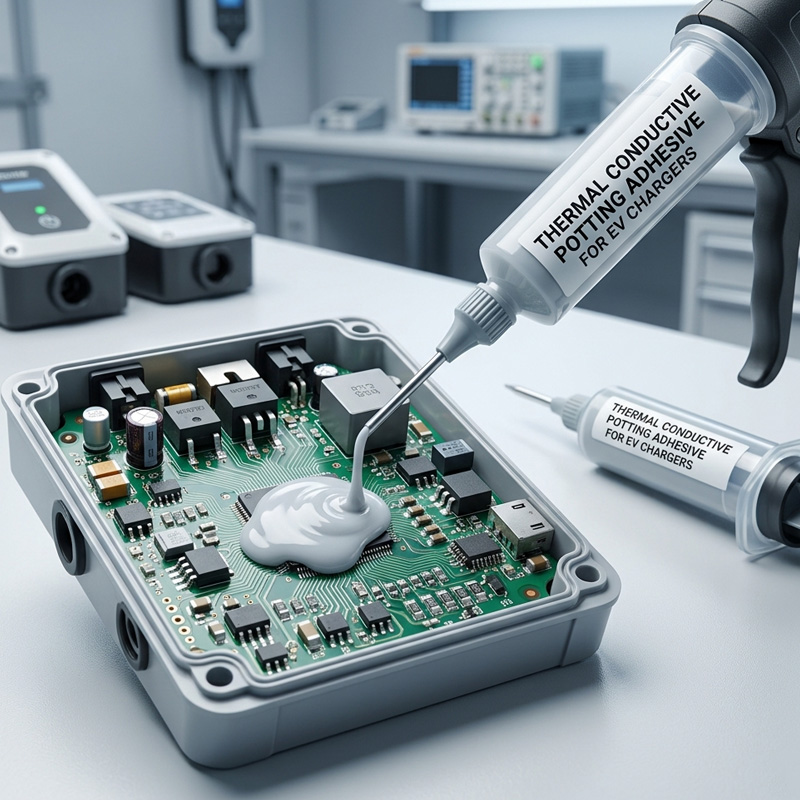
EV chargers contain many sensitive electronic and electrical components that must operate continuously under demanding conditions. Without proper protection, these components may fail prematurely due to environmental stress and heat buildup.
Many EV chargers are installed outdoors where they are exposed to rain, humidity, snow, and condensation. Moisture penetration can lead to corrosion, insulation failure, and short circuits. Potting compounds create a sealed protective barrier that prevents water ingress and improves long-term reliability.
Power electronics inside EV chargers generate substantial heat during charging cycles. Components such as MOSFETs, IGBTs, transformers, inductors, and power modules require effective heat transfer to maintain stable performance.
Thermally conductive potting compounds help dissipate heat from these components to the outer housing or heat sink, reducing operating temperatures and improving efficiency.
EV chargers operate at high voltages and currents. Potting materials provide dielectric insulation that protects against electrical leakage, arcing, and short circuits. This is particularly important in high-power DC fast chargers.
Charging stations may experience vibration, impact, and mechanical stress during transportation and operation. Potting compounds secure internal components and reduce damage caused by movement or thermal expansion.
Safety is a major concern in EV charging systems. Many potting compounds are formulated with flame-retardant properties to help reduce fire risks and comply with international safety standards.
Different types of potting compounds are used in EV charging equipment depending on application requirements. The three most common categories are silicone, epoxy, and polyurethane potting compounds.

Silicone potting compounds are widely used in EV chargers because of their excellent thermal stability, flexibility, and weather resistance.
* Excellent high-temperature resistance
* Superior flexibility after curing
* Outstanding UV and weather resistance
* Good thermal conductivity
* Low stress on sensitive components
* Long-term durability in outdoor environments
Silicone potting compounds are ideal for:
* Outdoor charging modules
* Power supplies
* DC fast charging systems
* High-voltage components
* LED indicators and control boards
* Charging connectors
Silicone materials can maintain stable performance across a wide temperature range. Thermally conductive silicone potting compounds often contain ceramic fillers that improve heat transfer efficiency while maintaining electrical insulation.
Because silicone remains flexible after curing, it can absorb thermal expansion and contraction without cracking. This makes it highly suitable for EV charging systems exposed to frequent temperature fluctuations.
Although silicone offers excellent flexibility and environmental resistance, it generally has lower mechanical strength compared to epoxy materials. Some silicone formulations may also have higher material costs.
Epoxy potting compounds are known for their strong mechanical strength, chemical resistance, and excellent electrical insulation properties.
* High mechanical strength
* Excellent adhesion
* Strong chemical resistance
* Superior electrical insulation
* Good dimensional stability
* High durability
Epoxy potting compounds are commonly used for:
* Power modules
* Transformers
* Capacitors
* High-voltage insulation
* PCB protection
* Structural encapsulation
Modern thermally conductive epoxy potting compounds include fillers such as aluminum oxide, boron nitride, or silica to improve heat dissipation. These materials help transfer heat away from power devices and improve charger reliability.
Epoxy materials are generally more rigid after curing. Under severe thermal cycling, excessive rigidity may create stress on sensitive electronic components. This can sometimes lead to cracking or reduced reliability in applications requiring high flexibility.
Polyurethane potting compounds provide a balance between flexibility and mechanical protection.
* Good flexibility
* Excellent moisture resistance
* Good low-temperature performance
* Strong vibration resistance
* Reliable electrical insulation
Polyurethane potting compounds are suitable for:
* Charging control units
* Outdoor electronics
* Sensor protection
* Communication modules
* Medium-power charging systems
Thermally conductive polyurethane formulations can improve heat transfer while maintaining flexibility. These materials are often used when moderate thermal conductivity and vibration resistance are both required.
Polyurethane generally has lower temperature resistance compared to silicone and epoxy systems. Long-term exposure to very high temperatures may reduce performance.
Selecting the best potting compound requires careful evaluation of several important performance factors.
Thermal conductivity is one of the most important properties for EV charger potting materials. Higher thermal conductivity allows heat to transfer more efficiently from electronic components to heat sinks or metal enclosures.
Typical thermally conductive potting compounds range from 0.8 W/mK to over 3.0 W/mK, depending on filler technology and application requirements.
High-power DC fast chargers usually require materials with higher thermal conductivity because they generate more heat during operation.
Potting compounds must provide strong dielectric insulation to prevent electrical failure. Important electrical properties include:
* Dielectric strength
* Volume resistivity
* Surface resistivity
* Arc resistance
Reliable insulation is especially critical in high-voltage charging systems.
EV charger materials must meet strict safety regulations. Many potting compounds are designed to comply with flame-retardant standards such as UL94 V-0.
Flame-retardant potting compounds help minimize fire risks and improve overall system safety.
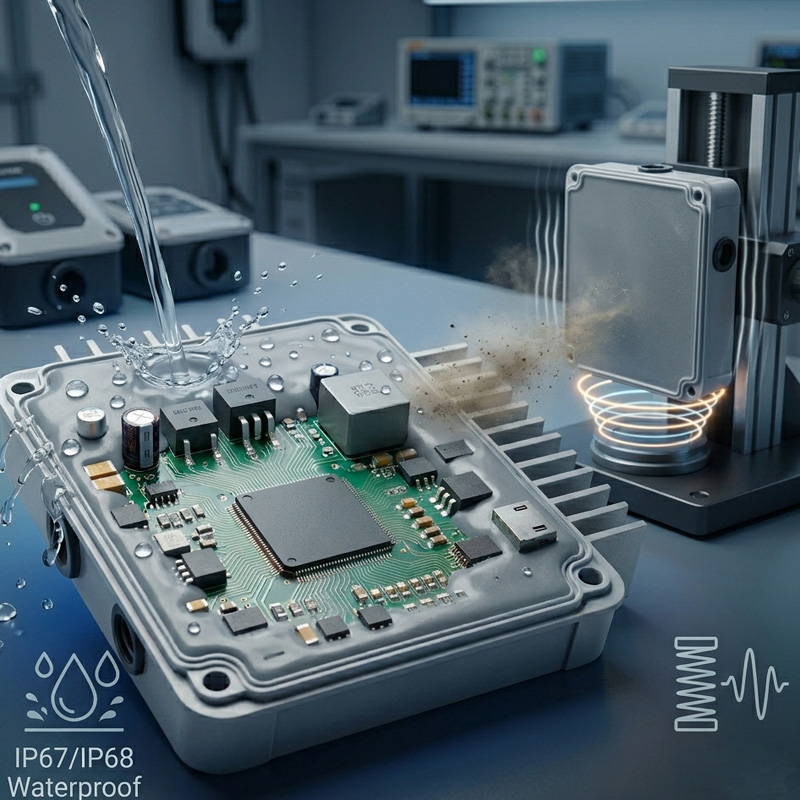
Outdoor EV chargers are exposed to:
* Rain
* Dust
* UV radiation
* Salt spray
* Humidity
* Temperature cycling
Potting compounds must maintain stable performance under these harsh environmental conditions for many years.
Good adhesion ensures that the potting material bonds securely to metal, plastic, ceramic, and PCB surfaces. Poor adhesion may allow moisture penetration or mechanical failure.
Low modulus and flexible potting compounds reduce stress on electronic components during thermal cycling. This is especially important for large power modules and delicate circuit boards.
Heat generation is unavoidable in EV charging systems. Efficient thermal management is essential for maintaining charger efficiency, safety, and long-term reliability.
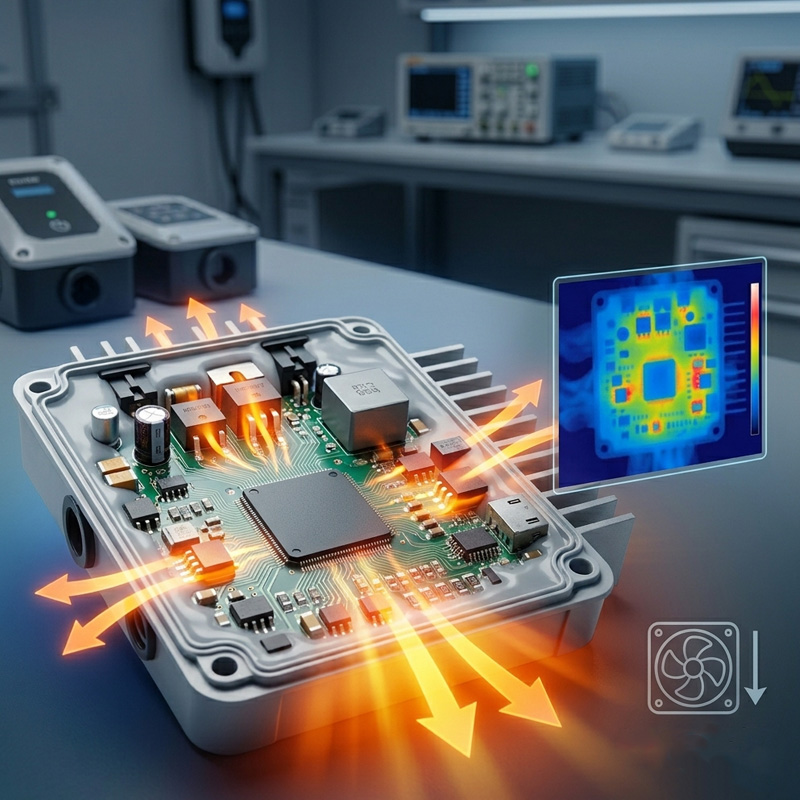
Power semiconductors generate heat during energy conversion. Thermally conductive potting compounds help move this heat away from critical components and distribute it more evenly throughout the system.
Uneven heat distribution can create localized hot spots that damage components. Potting materials improve thermal uniformity and reduce thermal stress.
Lower operating temperatures significantly extend the lifespan of electronic components. Effective thermal management reduces premature failure and maintenance requirements.
Excessive heat can reduce electrical efficiency. By controlling temperature rise, potting compounds help maintain stable charging performance.
Different charging systems require different protection strategies.
Home charging systems typically require:
* Moisture protection
* Electrical insulation
* Moderate thermal conductivity
* Long-term outdoor durability
Silicone and polyurethane potting compounds are commonly used in residential chargers because of their flexibility and weather resistance.
Commercial chargers experience higher operating loads and more frequent use. Recommended potting properties include:
* Higher thermal conductivity
* Strong mechanical stability
* Flame resistance
* Vibration protection
Thermally conductive epoxy or silicone systems are often preferred.
DC fast chargers generate substantial heat and operate at high power levels.
These systems require:
* Excellent heat dissipation
* High dielectric strength
* Strong flame retardancy
* Long-term thermal stability
Thermally conductive silicone and epoxy potting compounds are widely used in fast charging modules and power electronics.
As EV technology evolves, potting compounds are becoming more advanced.
Manufacturers are developing materials with improved thermal conductivity to support ultra-fast charging systems and higher power densities.
Lightweight materials help reduce overall charger weight while maintaining thermal performance.
Sustainable and low-VOC formulations are becoming increasingly important in electronic manufacturing.
Rapid curing potting compounds improve manufacturing efficiency and reduce production costs.
New flame-retardant technologies continue to improve charger safety without compromising thermal performance.
Choosing the right material requires balancing multiple performance requirements.
High thermal conductivity often requires heavy filler loading, which may increase viscosity and make processing more difficult.
Different materials expand at different rates during temperature changes. Improper material selection may create mechanical stress.
Potting compounds must withstand years of exposure to harsh environmental conditions. Comprehensive reliability testing is essential.
High-performance materials may increase production costs. Manufacturers must balance performance and budget requirements.
Several factors should be evaluated before selecting a potting material.
Choose a material capable of withstanding expected operating temperatures and thermal cycling conditions.
Higher power chargers generally require better thermal conductivity.
Outdoor chargers need excellent weather resistance and waterproofing performance.
Applications exposed to vibration or movement may benefit from flexible materials such as silicone or polyurethane.
Verify dielectric strength and flame-retardant certifications.
Consider curing speed, viscosity, dispensing method, and production efficiency.
Even the best material may fail if the potting process is not properly controlled.
Clean surfaces improve adhesion and reduce contamination risks.
Entrapped air can reduce insulation performance and thermal conductivity. Vacuum degassing may improve quality.
Two-component potting systems require accurate mixing for optimal curing and performance.
Proper curing temperature and time ensure full material performance.
The global EV market continues to expand rapidly, increasing demand for high-performance charging infrastructure. Future charging systems will likely feature:
* Higher charging speeds
* Increased power density
* More compact designs
* Enhanced safety standards
* Smarter thermal management systems
As a result, potting compounds will play an increasingly important role in maintaining charger reliability, efficiency, and safety.
Advanced materials with higher thermal conductivity, improved flexibility, and enhanced environmental resistance will continue to support the next generation of EV charging technology.
Potting compounds are essential materials in modern EV charging systems. They provide critical protection against moisture, heat, vibration, electrical stress, and environmental exposure. At the same time, they significantly improve heat dissipation and long-term operational reliability.
Silicone potting compounds offer excellent flexibility and weather resistance, making them ideal for outdoor and thermally demanding applications. Epoxy systems provide superior mechanical strength and insulation performance, while polyurethane materials offer balanced flexibility and moisture resistance.
Selecting the best potting compound for EV charger protection and heat dissipation depends on factors such as thermal conductivity, operating temperature, environmental conditions, electrical safety requirements, and manufacturing processes.
As EV charging technology continues to evolve toward higher power and faster charging speeds, advanced thermally conductive potting compounds will become even more important for ensuring safe, efficient, and durable charging infrastructure.
Potting compounds protect electronic components from moisture, dust, vibration, thermal stress, and electrical failure while also improving heat dissipation and insulation performance.
Silicone potting compounds are generally considered the best option for high-temperature applications because of their excellent thermal stability and flexibility.
Thermal conductivity helps transfer heat away from power components, reducing operating temperatures and improving charger efficiency and lifespan.
Yes. Epoxy potting compounds provide strong mechanical protection, excellent insulation, and good chemical resistance, making them suitable for many EV charging applications.
Important properties include thermal conductivity, electrical insulation, flame retardancy, flexibility, environmental resistance, adhesion strength, and processing characteristics.
Yes. By protecting components from heat, moisture, and environmental stress, potting compounds help reduce component failure and extend service life.
Silicone materials offer higher temperature resistance and better weather stability, while polyurethane materials provide good flexibility and vibration resistance at a lower cost.


