

Views: 222 Author: Zhang Xin Publish Time: 2026-05-07 Origin: Site


Content Menu
● Understanding Thermal Management in EV Charging Stations
>> Why Thermal Management Matters
>> Thermal Challenges in Fast Charging Stations
>>> Outdoor Environmental Exposure
>>> Continuous High-Power Operation
● Types of Potting Compounds Used in EV Charging Stations
>>> Advantages of Silicone Potting Materials
>>> Benefits of Epoxy Potting Materials
>> Polyurethane Potting Compounds
>>> Advantages of Polyurethane Potting
● How Potting Compounds Improve Thermal Management
>> Thermally Conductive Fillers
>> Minimizing Thermal Expansion Damage
● Improving System Reliability
>> Protection Against Moisture and Contamination
>> Vibration and Shock Resistance
● Key Applications of Potting Compounds in EV Charging Stations
● Importance of Thermal Conductivity in Potting Materials
● Understanding Thermal Conductivity
>> Selecting the Right Thermal Conductivity
● Flame Retardancy and Safety Performance
>> Preventing Electrical Failures
● Environmental Resistance in Outdoor Charging Stations
● Advantages of Silicone Potting Compounds for EV Chargers
>> Excellent Weather Resistance
● Challenges in Potting EV Charging Systems
● Future Trends in EV Charger Potting Technology
● Higher Thermal Conductivity Materials
>> Sustainable Potting Solutions
● Selecting the Right Potting Compound for EV Charging Stations
● FAQs About Potting Compounds in EV Charging Stations
>> What is the main purpose of potting compounds in EV charging stations?
>> Which potting material is best for EV charging applications?
>> How do thermally conductive potting compounds improve heat dissipation?
>> Are potting compounds necessary for fast charging stations?
>> Can potting compounds improve waterproof performance?
>> What thermal conductivity level is suitable for EV chargers?
>> Do potting compounds help improve charging station lifespan?
The rapid growth of electric vehicles has accelerated the development of EV charging infrastructure around the world. From residential charging systems to public DC fast charging stations, modern charging equipment is expected to deliver higher power, faster charging speeds, improved reliability, and longer service life. As charging technology evolves, thermal management has become one of the most critical challenges facing EV charging station manufacturers.
Excessive heat can reduce charging efficiency, damage sensitive electronic components, shorten equipment lifespan, and even create safety risks. To address these challenges, manufacturers increasingly rely on potting compounds to improve thermal performance and protect electronic assemblies inside charging systems.
Potting compounds are widely used in EV charging stations because they provide thermal conductivity, electrical insulation, waterproof protection, flame resistance, vibration resistance, and environmental sealing. These materials help dissipate heat generated by high-power electronic components while maintaining operational reliability under harsh conditions.
This article explores how potting compounds improve thermal management in EV charging stations, the types of materials commonly used, their advantages, key application areas, and important considerations for selecting the right potting solution.
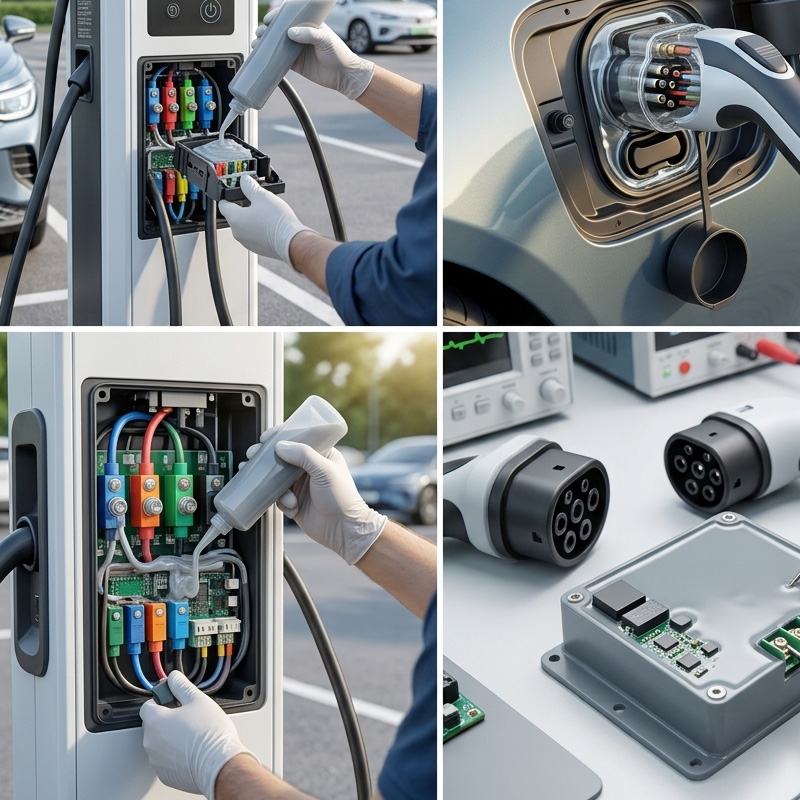
Thermal management refers to the control and dissipation of heat generated during charging operations. EV charging stations contain numerous power electronic components that produce significant heat during energy conversion and transmission.
Key heat-generating components include:
* Power modules
* IGBTs and MOSFETs
* Transformers
* Capacitors
* Connectors
* Charging cables
* PCB assemblies
* DC-DC converters
If this heat is not properly managed, several problems may occur:
* Reduced charging efficiency
* Overheating failures
* Component degradation
* Shortened service life
* Charging interruptions
* Increased maintenance costs
* Safety hazards
As EV charging systems move toward ultra-fast charging technologies, thermal challenges become even more severe due to higher current and voltage levels.
DC fast charging stations generate much more heat than conventional AC chargers. High-power charging systems operating at 150kW, 240kW, or even 350kW require highly efficient thermal solutions.
Common thermal issues include:
Dense electronic layouts can trap heat inside compact enclosures.
Charging stations are often installed outdoors where they face:
* High ambient temperatures
* Rain and humidity
* UV exposure
* Dust contamination
* Rapid temperature fluctuations
Commercial charging stations may operate continuously for long periods, creating persistent thermal stress.
Compact charger designs leave limited room for traditional cooling systems.
Because of these challenges, thermal interface materials and thermally conductive potting compounds have become essential in EV charging infrastructure.
Potting compounds are protective materials used to encapsulate electronic components and assemblies. They are usually liquid during application and cure into solid or gel-like protective materials.
Potting materials can provide:
* Thermal conductivity
* Electrical insulation
* Moisture resistance
* Mechanical protection
* Flame retardancy
* Chemical resistance
* Shock and vibration resistance
In EV charging stations, potting compounds play both protective and thermal management roles.

Silicone-based potting compounds are widely used in EV charging applications because of their excellent thermal stability and flexibility.
* Wide operating temperature range
* Excellent thermal conductivity
* Superior weather resistance
* UV resistance
* Good flexibility
* Long-term reliability
Silicone materials are especially suitable for outdoor charging stations exposed to harsh environmental conditions.
Epoxy potting compounds provide excellent mechanical strength and strong adhesion.
* High structural rigidity
* Excellent electrical insulation
* Strong chemical resistance
* Good thermal conductivity
* Durable encapsulation
Epoxy systems are commonly used in power modules and transformer encapsulation.
Polyurethane materials offer a balance between flexibility and mechanical protection.
* Good impact resistance
* Flexible performance
* Moisture resistance
* Good adhesion
* Cost-effective solution
Polyurethane systems are often used in sensitive electronic assemblies requiring moderate flexibility.
Modern potting compounds contain thermally conductive fillers such as:
* Aluminum oxide
* Boron nitride
* Aluminum nitride
* Silica
These fillers create heat transfer pathways inside the material, allowing heat to move away from sensitive components.
Potting compounds improve thermal transfer by:
* Eliminating air gaps
* Increasing surface contact
* Conducting heat toward heat sinks or enclosures
* Distributing heat more evenly
Air is a poor thermal conductor. By replacing trapped air with thermally conductive potting material, heat dissipation efficiency improves significantly.
Uneven heat distribution can create localized hot spots that damage electronic components.
Potting compounds help:
* Spread heat evenly
* Reduce temperature concentration
* Stabilize operating temperatures
* Improve thermal balance
Frequent temperature cycling can cause expansion and contraction of electronic materials.
Flexible potting compounds reduce mechanical stress by absorbing movement between components.
This helps prevent:
* Cracking
* Solder joint failure
* Delamination
* Component fatigue
Moisture can significantly affect thermal performance and electrical safety.
Potting compounds provide environmental sealing against:
* Water ingress
* Humidity
* Dust
* Salt spray
* Chemical contaminants
This protection is especially important for outdoor EV charging stations.
Charging stations installed in public areas may experience vibration, impact, or mechanical stress.
Potting compounds secure components and reduce mechanical movement, improving long-term durability.
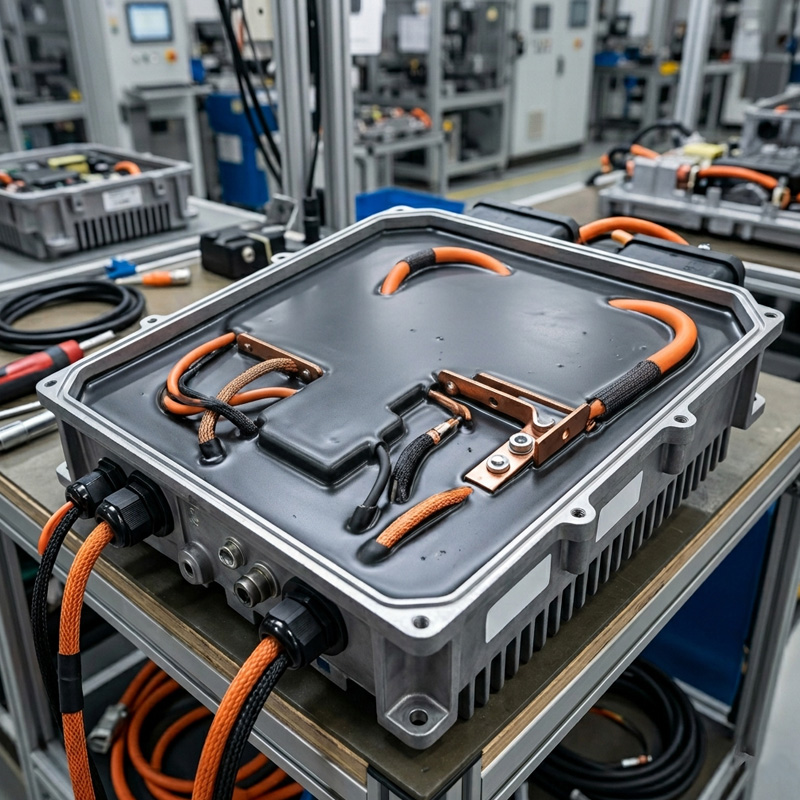
Power modules are among the most heat-sensitive components inside EV chargers.
Potting compounds help:
* Transfer heat away from semiconductors
* Protect circuits from moisture
* Improve insulation performance
* Reduce vibration damage
Thermally conductive silicone potting materials are especially common in high-power modules.
Transformers generate significant heat during operation.
Potting compounds improve transformer performance by:
* Enhancing heat dissipation
* Providing electrical insulation
* Reducing vibration noise
* Preventing moisture penetration
Printed circuit boards inside EV chargers face environmental and thermal stress.
Potting materials help:
* Protect delicate circuits
* Improve dielectric performance
* Reduce thermal accumulation
* Prevent corrosion
Charging connectors and cables are exposed to repeated outdoor use.
Potting compounds help improve:
* Waterproof performance
* Mechanical durability
* Thermal stability
* Electrical insulation
Thermal conductivity measures a material's ability to transfer heat.
In EV charging applications, higher thermal conductivity allows faster heat removal from electronic components.
Typical thermally conductive potting compounds range from:
* 0.8 W/m·K
* 1.5 W/m·K
* 3.0 W/m·K
* Above 5.0 W/m·K for advanced applications
The required thermal conductivity depends on:
* Charger power level
* Heat generation
* Cooling system design
* Component density
* Operating environment
Ultra-fast charging systems often require higher thermal conductivity materials.
EV charging stations operate under high voltage and high current conditions.
Safety standards often require flame-retardant materials to reduce fire risks.
Many potting compounds meet flame-retardant standards such as:
* UL94 V-0
* RoHS compliance
* REACH compliance
Potting compounds help reduce risks associated with:
* Electrical arcing
* Short circuits
* Thermal runaway
* Insulation breakdown
This improves overall charging station safety.
Outdoor charging stations must withstand rain, humidity, and condensation.
Potting compounds provide long-term waterproof sealing that protects internal electronics.
Sunlight exposure can degrade some materials over time.
Silicone potting compounds offer excellent UV stability for outdoor applications.
EV charging stations may operate in:
* Hot desert climates
* Cold winter environments
* Coastal areas
* Industrial zones
High-performance potting compounds maintain stable performance across wide temperature ranges.
Silicone materials maintain performance under extreme temperatures.
This makes them ideal for:
* Fast chargers
* Outdoor charging stations
* High-power modules
Unlike rigid materials, silicone compounds remain flexible after curing.
This flexibility helps absorb thermal expansion stress.
Silicone systems resist:
* UV radiation
* Moisture
* Ozone
* Temperature cycling
These properties extend charging station lifespan.
While potting compounds improve thermal performance, incorrect material selection can trap heat instead of dissipating it.
Manufacturers must carefully balance:
* Thermal conductivity
* Viscosity
* Hardness
* Flow characteristics
Important processing factors include:
* Mixing ratio
* Cure time
* Bubble elimination
* Dispensing accuracy
Poor processing can reduce thermal efficiency.
Fully potted systems may be difficult to repair because components become encapsulated inside cured material.
Some manufacturers use softer gel materials for partially serviceable designs.
As charging power increases, the industry demands advanced materials with improved thermal conductivity.
Future materials may offer:
* Lower thermal resistance
* Better heat spreading
* Reduced weight
* Improved processability
Emerging technologies include materials with adaptive thermal properties and enhanced heat management capabilities.
Environmental regulations are driving development of:
* Low-VOC materials
* Eco-friendly formulations
* Recyclable systems
Choosing the correct potting material requires evaluating multiple factors.
Consider:
* Thermal conductivity
* Heat dissipation requirements
* Operating temperatures
Important parameters include:
* Dielectric strength
* Insulation resistance
* Volume resistivity
Evaluate:
* Flexibility
* Hardness
* Adhesion
* Vibration resistance
Consider exposure to:
* Moisture
* UV radiation
* Chemicals
* Temperature cycling
Ensure compliance with:
* Flame-retardant standards
* Environmental regulations
* Automotive requirements
Thermal management has become a critical aspect of modern EV charging station design. As charging systems move toward higher power levels and faster charging speeds, efficient heat dissipation is essential for ensuring safety, reliability, and long-term performance.
Potting compounds play a vital role in improving thermal management by enhancing heat transfer, reducing thermal stress, protecting electronic components, and improving environmental resistance. Thermally conductive silicone, epoxy, and polyurethane potting materials help manufacturers achieve better durability and operational stability in demanding charging environments.
In addition to thermal performance, potting compounds provide electrical insulation, waterproof sealing, flame retardancy, and mechanical protection, making them indispensable materials in modern EV charging infrastructure.
As the EV industry continues to expand globally, advanced potting technologies will remain essential for supporting the next generation of high-efficiency, high-reliability EV charging systems.
Potting compounds are used to protect electronic components while improving thermal management, electrical insulation, waterproofing, and mechanical durability.
Silicone potting compounds are widely preferred because they offer excellent thermal stability, flexibility, UV resistance, and long-term outdoor reliability.
They transfer heat away from electronic components through thermally conductive fillers and eliminate insulating air gaps inside assemblies.
Yes. DC fast charging stations generate significant heat, making thermally conductive potting materials essential for reliability and safety.
Yes. Potting compounds seal electronic assemblies against moisture, rain, humidity, and environmental contamination.
The required thermal conductivity depends on charger power and design, but many EV charging applications use materials ranging from 1.0 W/m·K to over 5.0 W/m·K.
Yes. By reducing thermal stress and protecting against environmental damage, potting compounds significantly improve equipment durability and service life.


