

Views: 222 Author: Zhang Xin Publish Time: 2026-10-27 Origin: Site


Content Menu
● Understanding Capacitors in AI Data Centers
>> The Role of Capacitors in Power Electronics
>> Thermal Challenges in High-Density Computing
● Why Thermal Potting Compounds Matter
>> Providing Electrical Insulation
>> Improving Mechanical Protection
>> Protecting Against Environmental Exposure
● Introducing CYCT CT-E3001 Epoxy Potting Compound
>> Potential Application Considerations
● Thermal Potting in Liquid Cooling Systems
>> How Potting Complements Liquid Cooling
● How to Select the Right Potting Compound for Capacitors
>> Evaluate the Electrical and Thermal Requirements
>> Review Processing and Curing Conditions
>> Verify Compatibility and Reliability
● Application and Quality Control
>> Surface Preparation and Dispensing
● Why Choose CYCT for Potting Material Evaluation?
>> Can CT-E3001 Be Used for Capacitors in AI Data Centers?
>> Does CT-E3001 Improve Heat Dissipation?
>> Can Epoxy Potting Compounds Be Used in Liquid-Cooled Equipment?
>> What Information Is Needed to Recommend a Potting Compound?
The rapid development of artificial intelligence (AI), high-performance computing, and cloud infrastructure is increasing the demand for reliable power electronics. AI data centers require stable power delivery, efficient energy conversion, and effective thermal management to support continuous operation. Capacitors are essential components in these systems, helping stabilize voltage, filter electrical noise, and maintain power quality.
As power density increases, capacitors and surrounding electronic components may experience greater thermal and electrical stress. Liquid cooling systems can improve overall heat removal, but individual components still require appropriate insulation, protection, and thermal management.
Thermal potting compounds offer a practical solution for selected electronic assemblies. Depending on their formulation, these materials can provide electrical insulation, mechanical protection, environmental resistance, and heat transfer.
CYCT Changyuan Changtong New Materials provides adhesive and potting material solutions for electronic and industrial applications. This article explores the role of thermal potting compounds in capacitor applications, key material selection considerations, and how CT-E3001 epoxy potting compound may be evaluated for electronic potting projects.

Capacitors perform several important functions in modern data center infrastructure. They are commonly used in power supplies, DC-link circuits, power conversion equipment, uninterruptible power supply systems, and power distribution units.
Their primary functions include voltage stabilization, ripple reduction, energy storage, and transient response support. These functions help maintain stable electrical performance as computing workloads and power demands change.
However, continuous operation, ripple current, internal resistance, and heat generated by neighboring components can affect capacitor operating temperatures. Appropriate component selection, circuit design, and thermal management are therefore essential for dependable performance.
AI data centers contain high-performance processors, power conversion modules, networking equipment, and cooling infrastructure within increasingly compact spaces. As power density rises, thermal management becomes more complex.
Even when a facility uses liquid cooling, not every electronic component is directly cooled by circulating liquid. Heat may need to travel through component surfaces, thermal interface materials, mounting structures, and heat exchangers before reaching the cooling circuit.
Consequently, localized heat management remains important for selected capacitors and power electronic assemblies.
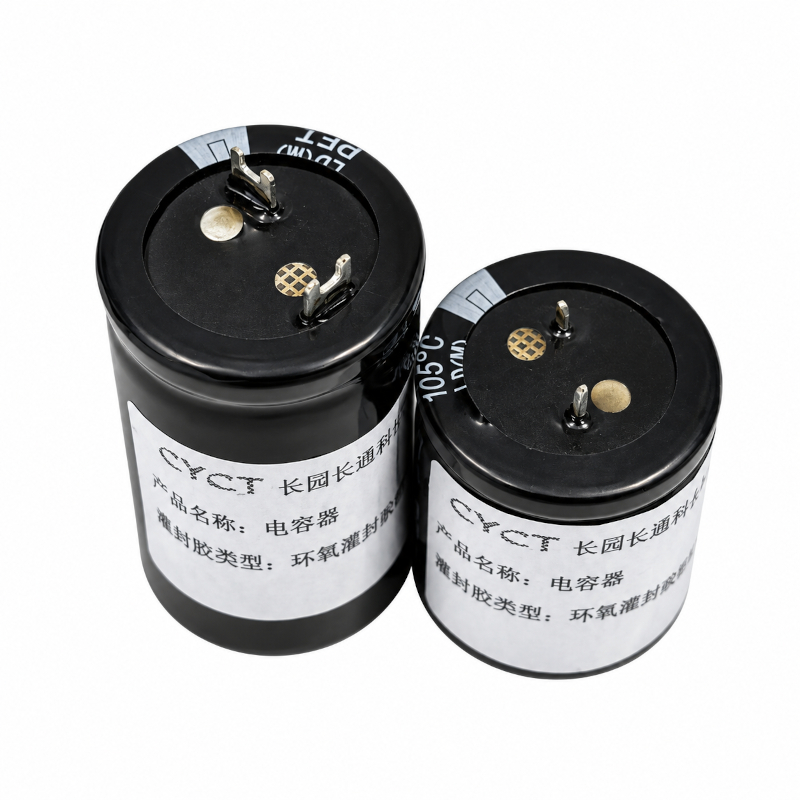
Thermal potting compounds are formulated to fill designated spaces around electronic components. When a compound contains suitable thermally conductive fillers, it can help transfer heat from component surfaces toward a heat-conducting structure.
This can be beneficial in compact electronic assemblies where air gaps and limited contact areas restrict heat transfer. However, actual performance depends on thermal conductivity, application thickness, interface quality, and the overall thermal design.
A material with higher thermal conductivity does not automatically produce a better result. Engineers must consider the complete heat transfer pathway and validate performance under representative operating conditions.
Electrical insulation is essential in power electronics. Suitable potting materials can help isolate conductive components and reduce the risk of unintended electrical contact.
Relevant properties include dielectric strength, volume resistivity, moisture resistance, and compatibility with the electrical insulation system.
The material must be selected according to the operating voltage, component geometry, applicable safety requirements, and the manufacturer's technical specifications.
Electronic assemblies may experience vibration, transportation stress, thermal cycling, and mechanical movement during operation.
A suitable potting compound can provide support to selected components and connections. The required flexibility depends on the assembly design, materials, and expected temperature changes.
Excessively rigid materials may introduce stress into sensitive components. Engineers should therefore evaluate mechanical compatibility rather than selecting a compound solely for its hardness or strength.
Moisture, dust, and environmental contaminants can affect electronic reliability. Suitable potting compounds may help protect selected components by forming a protective barrier.
Nevertheless, potting should complement rather than replace appropriate enclosure sealing, condensation control, and coolant leak prevention. Compatibility with the actual operating environment must be verified.
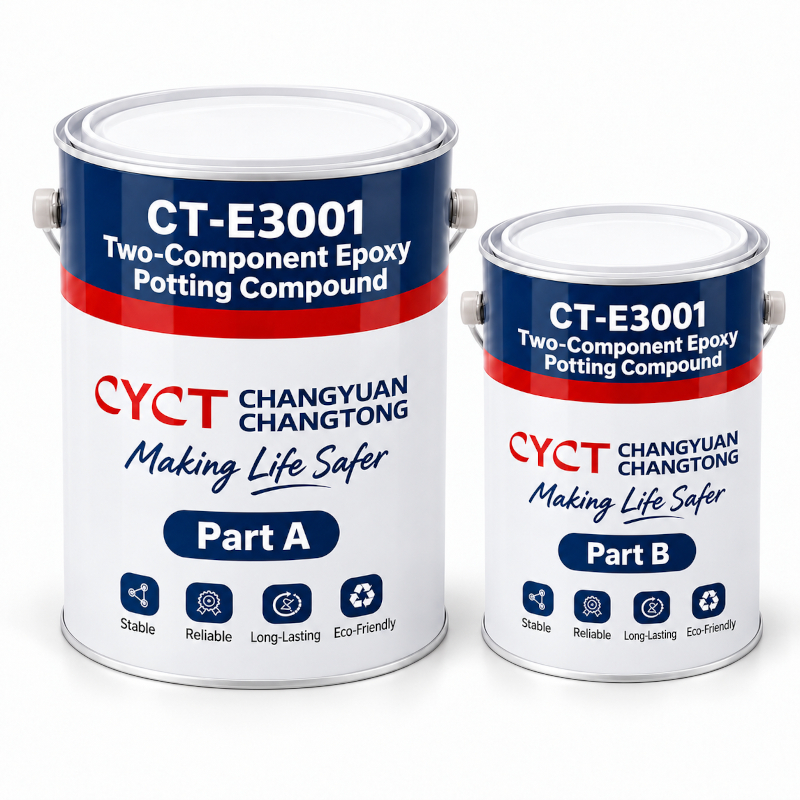
CT-E3001 is a two-component epoxy potting compound intended for electronic potting applications. According to the product information available for this material, it is designed for room-temperature curing and features a low-viscosity formulation.
These characteristics may be useful in manufacturing processes that require controlled dispensing and filling of suitable electronic assemblies.
For capacitor applications in AI data centers and liquid cooling systems, engineers should assess CT-E3001 against the specific requirements of the intended component and assembly.
Its suitability for a particular capacitor design depends on the component structure, operating temperature, electrical requirements, thermal pathway, and compatibility with surrounding materials.
CT-E3001 may be evaluated for selected electronic potting applications where a two-component epoxy system and low-viscosity processing are appropriate.
Potential evaluation areas include:
- Potting of suitable electronic assemblies.
- Insulation and protection of selected power electronic components.
- Protection of appropriate terminal regions and supporting electronics.
- Applications requiring controlled filling of designated cavities.
These are potential evaluation areas rather than confirmation that the product is qualified for every listed application. Final suitability should be established through technical review and testing.
For manufacturers developing electronic equipment, material selection must balance processing requirements, electrical insulation, mechanical performance, and long-term reliability.
CT-E3001 provides a potential material option for projects requiring a two-component epoxy potting compound. Its low-viscosity formulation and room-temperature curing characteristics may be relevant to manufacturing processes where those properties are beneficial.
Before selection, engineers should confirm the product's current technical data sheet, including its viscosity, mixing ratio, working time, curing schedule, dielectric properties, operating temperature range, and other relevant performance specifications.
Thermal conductivity should also be verified if enhanced heat transfer is a key design requirement. A material should not be described as thermally conductive unless the relevant specification supports that claim.
Liquid cooling removes heat through a circulating coolant and a designed heat transfer system. Thermal potting compounds serve a different function: they protect selected electronic components and may help transfer heat along specific pathways.
In a well-designed assembly, these approaches can work together. A potting compound may transfer heat toward a housing or heat spreader, while the liquid cooling circuit removes heat from the designated cooling surface.
However, potting material should not obstruct cold plates, coolant channels, thermal interfaces, or other functional cooling structures.
Engineers should consider material placement and thickness during the design stage to avoid creating unnecessary thermal resistance.
When evaluating a potting compound for liquid-cooled equipment, manufacturers should consider the following factors:
Thermal requirements: Identify heat sources, allowable component temperatures, and the intended heat transfer pathway.
Electrical requirements: Confirm insulation performance and compatibility with the electrical design.
Mechanical requirements: Evaluate adhesion, rigidity, thermal expansion, and resistance to vibration.
Environmental compatibility: Assess humidity, condensation, temperature cycling, and any potential contact with coolant or other fluids.
Manufacturing requirements: Review viscosity, dispensing conditions, working time, mixing, and curing.
A comprehensive assessment helps ensure that the selected material supports the complete assembly rather than solving only one isolated performance issue.
Begin by identifying the capacitor type, operating voltage, ripple current, expected temperature range, and surrounding heat sources.
Determine whether the primary objective is electrical insulation, mechanical protection, improved heat transfer, or a combination of these functions.
If thermal management is the main concern, review the complete thermal resistance of the assembly. Material conductivity, layer thickness, contact quality, and the receiving heat sink or cooling structure all influence the final result.
Manufacturing teams should confirm whether the material can be processed using their existing equipment and production methods.
Important parameters include the component mixing ratio, viscosity, working time, cure time, and any required post-curing process.
Room-temperature curing may be advantageous for heat-sensitive assemblies, but the actual curing conditions must follow the product's technical instructions. Temperature, humidity, material volume, and assembly geometry can affect curing behavior.
The compound should be compatible with the capacitor housing, insulation materials, terminals, circuit boards, and other nearby components.
Testing may include adhesion evaluation, thermal cycling, humidity exposure, vibration testing, electrical insulation measurements, and operating-temperature assessment.
Where relevant, manufacturers should also evaluate the consequences of thermal expansion and mechanical stress on the capacitor assembly.
Testing should be conducted using representative assemblies whenever possible.
Proper surface preparation helps improve adhesion and reduce contamination-related defects. Components should be prepared according to the material supplier's instructions and the compatibility requirements of the assembly.
For two-component systems, accurate proportioning and thorough mixing are essential. Inadequate mixing may result in incomplete curing and inconsistent material performance.
Dispensing conditions should be controlled to minimize trapped air, incomplete filling, and material leakage into areas that must remain unobstructed.
After dispensing, the material should cure under the specified conditions. The production process should account for working time, component positioning, and the required cure schedule.
Quality inspection may include visual checks, examination of representative samples, and verification of relevant electrical or mechanical properties.
For critical applications, manufacturing teams should establish process controls for material storage, shelf life, batch traceability, mixing, dispensing, and curing.
These measures help improve consistency and reduce the risk of defects in finished electronic assemblies.
Selecting a suitable potting compound involves more than comparing product names or individual technical parameters. The material must meet the specific requirements of the component, the manufacturing process, and the intended operating environment.
CYCT Changyuan Changtong New Materials develops adhesive and potting material solutions for electronic and industrial applications. CT-E3001 can be considered as a candidate for appropriate electronic potting projects, subject to verification of its technical specifications and application compatibility.
By sharing the application requirements with the CYCT technical team, manufacturers can assess the relevant product data, discuss processing considerations, and determine whether sample testing is appropriate.
This collaborative approach helps identify material solutions that align with electrical insulation, mechanical protection, manufacturing, and reliability objectives.
Thermal potting compounds can contribute to the protection and thermal management of selected capacitors and power electronic assemblies used in AI data centers and liquid cooling systems.
Their potential benefits include electrical insulation, mechanical support, environmental protection, and heat transfer when the formulation is specifically designed for that purpose.
Choosing the right compound requires consideration of the complete system, including capacitor construction, thermal pathways, electrical requirements, material compatibility, and production conditions.
CYCT CT-E3001 is a two-component epoxy potting compound that can be evaluated for suitable electronic potting applications. Its suitability for capacitor assemblies should be confirmed using current product specifications and representative application testing.
For manufacturers developing power electronics and liquid-cooled equipment, careful material selection and validation are important steps toward building reliable electronic systems.
CT-E3001 is a two-component epoxy potting compound intended for electronic potting applications. Its reported characteristics include low viscosity and room-temperature curing. Please consult the current technical data sheet for confirmed specifications.
Its suitability depends on the capacitor design, electrical requirements, thermal conditions, and material compatibility. Engineers should review the product specifications and conduct application testing before confirming its use.
The thermal performance of CT-E3001 should be assessed using its verified thermal conductivity and the design of the complete assembly. Do not assume that it provides enhanced heat transfer without supporting product data.
Yes, suitable epoxy compounds can be used in selected electronic assemblies within liquid-cooled equipment. Compatibility with operating temperatures, surrounding materials, and possible fluid exposure must be evaluated.
Useful information includes the component type, operating voltage, temperature range, thermal requirements, required insulation properties, assembly geometry, manufacturing process, and expected environmental exposure.


